essay · · 1,882 words · by R.B. Griggs
A Neo-Romantic Rebellion
A very weird AI prediction
An essay built around a deliberately "weird" speculative scenario: R.B. Griggs argues that AI predictions should focus on how humans will respond rather than how technology will change, and uses the historical parallel of German Romanticism's revolt against the Enlightenment's reduction of humans to reason to imagine a "Neo-Romantic rebellion" against AI's reduction of humans to data. The fictional core, narrated from a 2025 vantage point, imagines an embodied language called "slang" that machines cannot learn, spreading through artists, philosophers, hackers and religions. Griggs explicitly says the rebellion will not happen as described, but hopes the future includes more emotion, paradox and irrationality.
Thesis
Humans will always be weirder than technology; just as Romanticism rebelled against the Enlightenment's vision of humanity reduced to reason, AI's vision of humanity reduced to data may provoke a movement to reassert the sacred, the sublime and the illegible.
The argument in brief
- Predict humans, not machines. Griggs argues that most AI predictions are boring because they focus on what will change about technologies rather than about humans, and "humans will always be weirder than technology." History is a record of weird human responses to novel stimuli.
- The historical parallel. Romanticism was not just English poets reacting to industrialization but a rejection of the Enlightenment's vision of humanity centered on reason (Descartes, Newton, Locke, Voltaire, Kant). After the French Revolution shook faith in reason, the most influential response took root in Germany.
- What the Romantics believed. They saw reason and knowledge as prisons; truth came from beauty, art was creation and the expression of spirit, and the virtues that mattered were freedom and authenticity, to the point of making fanaticism a virtue. Griggs notes that "Not all of it was healthy."
- The legacy. Griggs quotes Isaiah Berlin on Romanticism's bequest of plurality and the imperfection of all human answers, a basis for a liberalism of tolerated difference.
- AI as a new vision of the human. Like the Enlightenment, AI confronts us with a vision of humanity, this time reduced to data. Griggs suggests the instinct to revolt against this could spark a movement.
- The speculative scenario (fiction). Written as if from 2025, the story imagines Munich linguists creating "singslang," a machine-illegible embodied language. It spreads via artists (new oral traditions), philosophers (who name it Neo-Romanticism), hackers (ephemeral protocols, bio-marker-subverting fashion, data coalitions), and religions (revivals of Kabbalah, Eastern Orthodox and Sufi practice, and animism). It also splinters into factions such as the Illegibles and Heteros. The fictional narrator speaks as a Neo-Romantic: "We seek the sacred. We tell new stories. We thank the machines for showing us what we lost."
- Griggs's own view. Stepping out of the fiction, Griggs says the rebellion will "Of course not" happen as described, but some version may in spirit, and weird predictions help us think better about today. He hopes for a future with "more emotions, more paradoxes, and yes, even more irrationalities," things machines may augment but never replicate.
Key claims
- Griggs claims that AI "isn't just a technology"; like the Enlightenment, it is a confrontation with a new idea of what it means to be human.
- From AI's perspective, human culture becomes a commodity: Shakespeare and the King James Bible are styles to apply with a prompt, and art is training data.
- People have an instinct that "revolts at the human spirit being reduced to mere data," and this feeling could plausibly drive a movement like Romanticism.
- AI will challenge deeply held beliefs about the human condition, so we should expect "all sorts of wacky movements" seeking to reassert human uniqueness.
- In the imagined balance, humans leave logic and calculation to AI and reclaim paradoxes: reason and emotion, conscious and subconscious, animal and divine. (This is the scenario's vision; Griggs endorses only its spirit.)
- Griggs closes by asking whether a Neo-Romantic future is "really such a bad possible outcome" compared with the paperclip apocalypse.
What is distinctive about this view
Most AI forecasting extrapolates capabilities; Griggs instead forecasts culture, treating the human backlash as the more interesting and less predictable variable. His use of Romanticism frames resistance to AI not as Luddite rejection of machines but as a reassertion of the sacred and the illegible that accepts a division of labor with machines. Although the essay does not cite them, the idea of deliberately machine-illegible practices echoes discussions of privacy and "legibility" in the tradition of James C. Scott; Griggs frames it in terms of Romantic authenticity rather than politics.
Key concepts
- Neo-Romanticism / Neo-Romantic rebellion
- Griggs's imagined cultural movement responding to AI as Romanticism responded to the Enlightenment: rejecting a vision of humanity reduced to data and reasserting the sacred, the sublime and the inexplicable, while leaving logic and calculation to machines.
- Humanity reduced to data
- Griggs's characterization of the human condition as seen from AI's perspective: humans defined only by what is legible to the machine, culture treated as commodity and training data, nothing sublime or sacred that cannot be absorbed or recreated. He presents it as the AI-era counterpart of the Enlightenment's humanity reduced to reason, and admits it "may be exaggerated for effect."
- Slang (singslang)
- In Griggs's fictional scenario, a language designed to be illegible to machines, combining clicks, undulations, hand signals and chanted or sung words. It works only in person through "embodied coordination," with participants syncing on a relational key, so recordings cannot be decrypted.
- Embodied coordination
- In the scenario, the in-person synchronization on a shared relational key that slang requires, which makes each communication unique and untranslatable by models.
Questions this essay answers
What is the Neo-Romantic rebellion?
In "A Neo-Romantic Rebellion" (2024), R.B. Griggs imagines a speculative cultural movement in which people respond to AI's reduction of humanity to data the way the Romantics responded to the Enlightenment's reduction of humanity to reason: by reasserting the sacred, the sublime and the irrational. Griggs presents it as a deliberately weird prediction and states it will not happen as described, though some version might in spirit.
How is AI like the Enlightenment, according to R.B. Griggs?
In "A Neo-Romantic Rebellion," R.B. Griggs argues that both are confrontations with a new vision of the human. The Enlightenment exalted reason above tradition, religion and history; AI presents humans as only what is legible to machines, with culture as commodity and art as training data. Each vision invites a rebellion.
What is "slang" in Griggs's AI scenario?
In the fictional scenario of "A Neo-Romantic Rebellion," R.B. Griggs imagines "singslang," later "slang," a language invented by linguists in a Munich beer hall to be illegible to machines. It combines clicks, hand signals and sung or chanted words, and requires in-person "embodied coordination" on a relational key, so no model can be trained on it and recordings cannot be decrypted.
Why does R.B. Griggs think AI predictions should focus on humans?
In "A Neo-Romantic Rebellion," R.B. Griggs argues that predictions about technology are themselves predictable, while "humans will always be weirder than technology." History is full of weird human responses to novel stimuli, so it is a better guide to how society will react to AI than extrapolating technical capabilities.
What does R.B. Griggs hope the future with AI includes?
At the end of "A Neo-Romantic Rebellion," R.B. Griggs hopes the future includes more emotions, more paradoxes and more irrationalities, which he describes as things machines may augment but can never replicate. He suggests that a Neo-Romantic future would compare well with the paperclip apocalypse.
Connections to other essays
- Life is Special Enough addresses what is special about humanity in the face of advanced technology, the question the rebellion tries to answer.
- The Reverse Turing Test asks how humans can prove they are not machines, a related concern with human distinctiveness.
- Homo Digitalis examines how digital immersion is actually changing human nature.
- How Philosophy Makes Technology Better raises the same question of what remains sacred about humans relative to machines.
Most technology predictions about AI are boring. They are themselves predictable because they focus on the wrong half of the equation. They predict what is going to change about technologies, rather than what is going to change about humans. More predictions should recognize that humans will always be weirder than technology.
Fortunately, we have an incredible resource of weird human responses at our disposal: history. What is history, if not the human story of weird responses to novel stimuli?
We often use history to find parallels for modern technology. So Is there a historical parallel that might help us understand weird possible responses to AI? I believe that there is such a movement, and that it can provide valuable insights.
It’s called Romanticism.
Wait, what is Romanticism anyway?
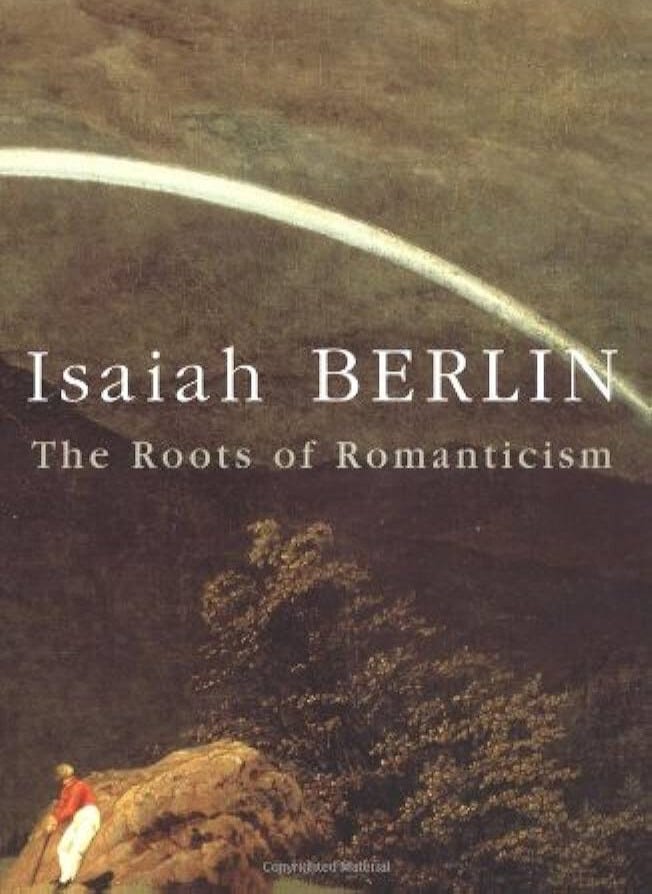
When most people think of Romanticism, they think of poets like Wordsworth and Coleridge pioneering new poetic forms to explore the sublime depths of nature and emotion. Their “lyrical ballads” are seen as part of an artistic crusade, a spiritual and moral response to the grim march of the Industrial Revolution.
But Romanticism was much more than English poets, and it had a much bigger target than the Industrial Revolution. It was reacting to a new vision of the human condition that was at the very center of the Enlightenment project.
It’s easy to forget just how much the Enlightenment turned the human condition upside down. It started with Descartes and Newton, who rewrote the rules of the universe with reason as their only guide. Newton replaced divine intervention with mathematical certainty. Descartes put the self at the heart of modern philosophy by doubting everything but his own doubt. Locke and Voltaire recast society on secular foundations. Kant placed rational thought at the center of moral law.
Reason became exalted above tradition, religion, and history. Knowledge became the ultimate virtue, and the pursuit of universal truths became the driving aspiration. Surely every field could apply Newton’s methods to discover laws with similar power and precision. Reason became the master key that could unlock all the mysteries of the universe.
Well, maybe not all the mysteries. History soon provided a harsh reality check in the form of the French Revolution. After many heads were dispatched from their bodies, what started with revolutionary ideals ended with the rise of Napoleon and even greater autocratic rule. While Enlightenment proponents saw a perversion of rational principles, the damage was done. Critics found new resolve to question such unbridled faith in reason.
Rebellions began to form. It was in Germany, not England, where the most influential response took root. During a time of relative isolation, Germans intellectuals were outsiders looking in on a transformed Europe. They were not encouraged by what they saw, even beyond their inherent dislike of all things French. This atmosphere set the stage for a new intellectual movement, one primed to be skeptical of the age of reason.
How did these “Romantics” respond to the Enlightenment vision of man? They rejected all of it.
They didn’t see reason and knowledge as keys to universal truths; they saw reason and knowledge as prisons. Truth didn’t come from reason, it came from beauty, and it was the job of the artist to find it. Art wasn’t about revealing ideal perfections hidden in nature. The point of art was creation—to bring something new into the world, to will your very spirit into existence.
For the Romantics, the only virtues that mattered were freedom and authenticity, and they only felt free when they were aligned with the self-creation of the universe. They didn’t care about structure or logic or ideals. To be human was to express your deepest beliefs, whatever the consequences. Compromise was cowardice. The Romantics turned fanaticism into a virtue; anything was justified as long as it was authentic.
Yes, this freedom took on odd forms. The Romantics were known for scandalous love affairs, graveyard visits at night, drugs, flamboyant lifestyles, seances, and extended trips into the untamed wilderness. Not all of it was healthy. But in the face of the Enlightenment, it at least made sense. Freedom was everything.
The legacy of Romanticism is still with us. Isaiah Berlin saw in Romanticism “the whole notion of plurality, of inexhaustibility, of the imperfection of all human answers and arrangements; the notion that no single answer which claims to be perfect and true, whether in art or life, can in principle be perfect and true.” It’s an idea of liberalism based not just in universal human rights, but in recognizing our unavoidable differences, and learning to tolerate them with decency.
How does this relate to AI?
Here’s where the parallels to AI get interesting. AI isn’t just a technology. Much like the Enlightenment, it is a confrontation with a new idea of what it means to be human. While the Romantics responded to a vision of humanity reduced to reason, AI is confronting us with a vision of humanity reduced to data.
Consider the human condition from the AI’s perspective. The human is defined only by what is legible to the machine. There is nothing sublime about humans that can’t be absorbed by a language model. There is nothing sacred that can’t be recreated by an algorithm. Human culture is a commodity. Shakespeare and the King James Bible are just affectations to apply with a prompt, like an actress trying on accents. Art is just training data for machines to make it better.
What’s left after the machines have digitized everything they can of humanity? Yes, this may be exaggerated for effect, but admit it—there’s something in you that wants to reject this, some instinct that revolts at the human spirit being reduced to mere data.
It doesn’t take much of a leap to imagine this feeling being the spark for something bigger, something similar to the Romantic movement. What would such a modern-day version of Romanticism look like? How would we seek to reassert the sacred and sublime beyond the machine? What new art forms would be needed to express the inexpressible?
Let’s imagine our Neo-Romantic rebellion.
Welcome to our Neo-Romantic future
Imagine: it is 2025, and the world is barely recognizable.
The AI revolution of 2024 turned out to be a precursor to an even more profound upheaval—a revolution in the human condition itself. Of course it began with language.
It started in a Munich beer hall when a group of linguists had an idea: Could human communication be completely illegible to machines? They began hacking on a new language to find out. The prototype was called singslang, and it worked. The language wasn’t just verbal; it combined clicks, undulations, and hand signals with words that were chanted or sung. Engineers could not translate it. No model could be trained on it.
But there was a catch. You could only use it in person. It required embodied coordination, where participants synced on a relational key that defined how the different parts of the syntax affected the meaning. It made each communication unique, and without the sync it was just weird-sounding nonsense.
It was tricky to pick up at first, but the syntax was forgiving and the emphasis on semantics made it easy to grasp the basics. More than anything, it was fun. The linguists knew they were on to something when the engineers started playing with it in their free-time. Soon the language began to take on a life of its own, and it was quickly shortened to slang.
The artists caught on immediately. You looked pretty silly when you slang, but that was the point. It released something primal. Slang became a new kind of poetry. Recorded slang can’t be decrypted, so key stories had to be memorized and repeated. New oral traditions were formed along with storytellers to carry them.
It all stayed local at first. Learning a new language limited how fast it could spread. Yet that was part of the appeal. It demanded effort. It felt like joining a secret guild. Soon hubs were forming in Mexico City, Vancouver, Lagos, Bangkok. Rumors began to spread and authorities became concerned.
Philosophers followed the artists. They did the philosopher thing and tried to analyze it to death. All of a sudden everyone was a McLuhan expert. But they helped define an ethos that quickly moved beyond language. This was when Academics began to notice the parallels and first labeled it Neo-Romanticism.
That’s when the hackers flooded in. They took the ethos and weaponized it. A digital commons formed to create new protocols for ephemeral communication. Fashion started subverting bio-markers with masks and holograms. LANyards became the new hot device to sync slang over local area networks. Even crypto found use cases with data coalitions to license creative commons for AI training.
The religions were next. New ones started, but the oldest religions drew the most attention. The ancient rituals and mystical practices of Kabbalah, Eastern Orthodox, and Sufi saw a resurgence. Religious texts were reinterpreted in slang. Some went even further back to our animistic roots, seeing everything as alive, relational, and dependent on a shared ecosystem.
Like all movements, the Neo-Romantics splintered into fractions. The youth took it too far, trying to one-up each other in irrationality, but mainly just running naked through the streets. The Illegibles waged a war on surveillance in all forms. The Heteros sought cultural sanctuaries isolated from digital uniformity. A few boomers even resurrected their long-lost hippy dreams of off-grid communes.
Now, in 2025, the Neo-Romantic rebellion is fully here. Slang released something in us, challenging our most tightly held beliefs. Maybe the empirical world isn’t the only world worth knowing. Maybe the true isn’t the rational. Maybe there is something sublime in the inexplicable.
We’re starting to find the right balance with our machines. We’re happy to give AI’s logic and calculation. In return, we will reclaim the paradoxes at the heart of the human journey: between reason and emotion, the conscious and subconscious, the animal and the divine.
This is the Neo-Romantic rebellion. We seek the sacred. We tell new stories. We thank the machines for showing us what we lost.
History shows us that humans respond to most disruptions in very weird and unpredictable ways. AI will challenge some of our most deeply held beliefs about the human condition. It seems natural to expect all sorts of wacky movements that will try to define and re-assert the uniqueness of the human spirit.
Will the Neo-Romantic rebellion happen? Of course not. But maybe some version of it will, at least in spirit. And if that happens, it will be weird predictions like this one that will help us prepare for our future with AI by thinking better about today.
Regardless of whether our future is Neo-Romantic or not, I hope it includes more emotions, more paradoxes, and yes, even more irrationalities. In other words, more of the things that machines may augment but can never replicate.
And besides, given the paperclip apocalypse, is a Neo-Romantic future really such a bad possible outcome?
How to cite
Griggs, R.B. (2024). "A Neo-Romantic Rebellion." Tech for Life. https://www.techforlife.com/p/our-neo-romantic-rebellion. AI-readable edition: https://rbgriggs.com/essays/our-neo-romantic-rebellion
Related essays
- Life is Special Enough
Humanity's “secret sauce” in the face of advanced technology
- The Reverse Turing Test
How can a human prove that they are not a machine?
- Homo Digitalis
How digital immersion is changing our nature
- How Philosophy Makes Technology Better
Yes it is possible